
Puritan theology
Were the Puritans Calvinists?
The question is a fair one, and the usual answers fail in opposite directions. General reference articles describe the Puritans as strict, plain-living English Protestants and say almost nothing about their doctrine of salvation. Forum answers say “Calvinist” and stop there, which leaves a reader assuming Puritan was the name of a denomination that has since died out. Neither tells you what a Puritan actually believed, or how the movement stood in relation to the churches around it.
So it is worth answering carefully. The short form is yes, overwhelmingly. The Puritans were Calvinists in their soteriology, their doctrine of how God saves sinners, and broadly Reformed across the rest of their theology.
The qualification matters as much as the answer. “Puritan” is not the name of a denomination. It names a movement inside the Church of England that wanted the English Reformation carried further in worship and church government, and its members were Presbyterian, Congregationalist, conforming Episcopalian and, in a minority, Baptist. They shared a theology rather than an institution. What follows sets out what they held, where they differed from one another, and the one major figure who is a genuine exception.
Were the Puritans Calvinists?
They were. Every recognised Puritan teacher held what later generations called the doctrines of grace: that fallen human beings cannot turn to God unaided, that God elects unconditionally, that Christ's death actually secures the salvation of those he died for, that grace is effectual in bringing the elect to faith, and that those God saves he keeps. On that they were unanimous in a way they were not unanimous about much else.
Two words are worth separating, because they are often used as though they meant the same thing. “Calvinist” usually refers to soteriology, the doctrine of salvation. “Reformed” is wider, taking in covenant theology, which reads Scripture as a series of binding promises God makes and keeps, along with a particular approach to worship, the sacraments, the law and church government. The Puritans were Calvinist in the first sense and Reformed in the second, and the second is where their distinctive character lies. One other note on vocabulary: the TULIP acronym is a twentieth-century teaching device, and no Puritan ever used it.
It also helps to correct a common picture. The Puritans were not a Calvinist minority inside a church that rejected Calvinism. Reformed doctrine was the mainstream of the Elizabethan and Jacobean Church of England: the Thirty-Nine Articles teach predestination to life in Article 17, and James I sent a British delegation to the Synod of Dort in 1618 and 1619 to help condemn Arminianism. What set the Puritans apart from other English Calvinists was not the doctrine of salvation. It was worship, church government, and the seriousness with which they pressed doctrine on the conscience.
What denomination were the Puritans?
None, and several. The question asks for a category the Puritans did not fit. They began as a party inside one national church, and what made a man a Puritan was a conviction rather than a membership. Within that church they divided over what order Scripture required, and the divisions were serious.
| Party | What they held about the church | Representative figures |
|---|---|---|
| Presbyterians | Government by graded assemblies of ministers and elders rather than by bishops. The largest party at the Westminster Assembly. | Thomas Manton, Edmund Calamy |
| Congregationalists, or Independents | Christ gave authority to each gathered local church, not to any assembly above it. | John Owen, Thomas Goodwin, Jeremiah Burroughs |
| Conforming Puritans | Stayed inside the established order, bishops and set forms included, and worked for reform by preaching. | Richard Sibbes, James Ussher |
| Particular Baptists | Calvinist in doctrine, and came to hold that baptism belongs only to those who profess faith. | Benjamin Keach, Hanserd Knollys, John Bunyan |
| Separatists | Judged the national church past reforming and left it altogether. | The congregation that became the Plymouth Pilgrims |
Two entries need a word of care. Bunyan is counted a Baptist in the usual reckoning, though his Bedford congregation did not make baptism a term of communion, and the Particular Baptists must not be confused with the General Baptists of the same era, who were Arminian and are no part of this story. The Separatists are a case of their own, which is why careful writers distinguish the Pilgrims from the Puritans.
The Great Ejection of 1662 settled the question of denomination for good. When roughly two thousand ministers were forced out of the Church of England for refusing to conform, a party inside one church became a set of churches outside it. The denominations came out of Puritanism, not the other way round. For the movement's full story, see who the Puritans were.
Did the Puritans believe in predestination?
Yes, and centrally. They taught that God, before creation and on no basis whatever in the creature, chose those he would save in Christ, and that this eternal decree is the reason anyone comes to faith. Election is unconditional: not God foreseeing who would believe and ratifying the choice, but God determining to give faith to people who would never otherwise have wanted it. They taught the harder side too. The Westminster Confession states that God passes by the rest and ordains them to dishonour and wrath for their sin, and Puritan writers did not soften it. The same chapter adds that the doctrine of this high mystery of predestination is to be handled with special prudence and care, a striking instruction to find inside a confession of faith.
In practice they used predestination pastorally, which is the part most summaries miss. Election grounded assurance for a believer afraid his own grip on Christ was too weak to hold, since salvation rests on God's choice and not on the strength of anyone's feelings. It answered pride, because nothing in the elect commended them. And it warranted patient preaching, because God saves through means and no preacher knows who the elect are. They were no fatalists. Our guide to the doctrines of grace covers the doctrine in book-length treatments, and the guide to covenant theology covers the framework they set it in.
Where the Puritans differed among themselves
Unanimity on the doctrines of grace did not mean uniformity. Three disagreements are worth knowing, because a reader will meet them in the Puritans' own books.
The logical order of the decrees
If God decreed both to permit the fall and to elect a people, in what logical order do those decrees stand? Supralapsarians placed election before the decree permitting the fall; infralapsarians placed it after, so that God elects out of a humanity already fallen. Neither side thought the decrees happened in time, and the dispute was about logical priority alone. William Perkins held the supralapsarian view, as did William Twisse, prolocutor of the Westminster Assembly. Yet most of the Assembly were infralapsarian, and the Confession was deliberately not framed to Twisse's position. That restraint is characteristic: on a question Scripture does not settle, they wrote language both sides could sign.
The extent of the atonement
The mainstream view was definite atonement, sometimes called limited atonement: Christ died to save the elect, and his death accomplishes what it was intended to accomplish. John Owen gave it its classic defence in The Death of Death in the Death of Christin 1647. A minority held what is now called hypothetical universalism, associated with Bishop John Davenant and argued on the floor of the Assembly by Edmund Calamy: alongside God's absolute intention to save the elect there was a conditional intention toward all. Calamy distanced himself sharply from the Arminian view of universal redemption, and other divines were unconvinced by the distinction. What matters for placing the Puritans is that the Confession's wording was broad enough for both parties to subscribe in good conscience, and historians still debate how wide that breadth was meant to be.
Preparation for grace
Since God saves through means, what happens in a person before conversion? Many Puritans, and New England writers especially, mapped stages of conviction, humiliation and contrition through which God ordinarily brings a sinner to Christ. Thomas Hooker and Thomas Shepard developed this preparationism in detail. Others feared it turned self-examination into a qualification for grace: Giles Firmin, who had ministered in New England, argued in The Real Christian in 1670 that nothing should be required of a soul that Christ and the apostles never required. The same anxiety fed the Antinomian Controversy in Massachusetts between 1636 and 1638, where Anne Hutchinson and others charged that preparationist preaching amounted to a covenant of works. How far the parties actually differed is still argued over by historians of the period.
The real exception: Richard Baxter
Any honest answer has to name Richard Baxter. He was one of the most widely read Puritans, pastor of Kidderminster, author of The Reformed Pastor and The Saints' Everlasting Rest, and he did not hold the Reformed doctrine of the atonement and of justification as his colleagues held it.
His Aphorisms of Justification of 1649 set off a long controversy. Baxter taught a form of universal redemption, and construed the gospel as a new law under which faith and repentance are the conditions God accepts, which gave faith a role in justification that other Puritans regarded as a step back toward works. Critics called the result neonomianism, meaning new-law teaching. Historians have described his position as Amyraldian, after the French theologian Moïse Amyraut, or as Grotian, after Hugo Grotius, and there is no settled agreement that either label fits, since Baxter built his own eclectic scheme and defended it at length. Owen thought the matter serious enough to answer at book length in The Doctrine of Justification by Faith in 1677.
Two things hold together here. Baxter was unquestionably a Puritan: ejected in 1662, pastoral to the core, still in print. And he was not a consistent Calvinist on these points. Naming that does not weaken the general answer, it sharpens it. The exceptions were recognised as exceptions at the time, by name, in print, by other Puritans.
Locating the Puritans by their confessions
The quickest way to place a Puritan writer is to ask which confession he would have signed. Three came out of this movement, and the relationship between them tells the story.
| Confession | Date | Party |
|---|---|---|
| Westminster Confession of FaithThe fullest statement of the theology most Puritans held. | 1646 | Presbyterian |
| Savoy DeclarationDrawn up at the Savoy in London, with John Owen and Thomas Goodwin leading. Follows Westminster closely and revises the chapters on the church. | 1658 | Congregationalist |
| Second London Baptist ConfessionFollows Westminster and Savoy, then departs on baptism and the church. | 1677, endorsed 1689 | Particular Baptist |
Read the three side by side and the pattern is unmistakable. The chapters on God's decree, sin, Christ, justification and perseverance are close to identical, and the differences concentrate in the chapters on the church, the magistrate and the sacraments. That is Puritanism in miniature: one soteriology, several answers on the church. Our guide to the confessions and catechisms covers all three, and the guide to church history covers the period that produced them.
What the Puritans were arguing against
They fought on two fronts, and the opposition reveals their convictions faster than any summary of them does.
Arminianism
The teaching associated with the Dutch theologian Jacobus Arminius and his followers made election conditional on foreseen faith and left the decisive movement in conversion with the human will. The Synod of Dort condemned it in 1618 and 1619. In England the word gained a political edge in the 1630s, when it was thrown at the ceremonialist churchmen who rose under Archbishop William Laud, so that calling a man an Arminian could carry a doctrinal charge, a political one, or both.
Antinomianism
Literally the position that the moral law has no continuing claim on the Christian. The Puritans were exposed here in an obvious way: if salvation is entirely of grace and the believer stands in Christ's righteousness, what work is the law still doing? Their answer was that the law no longer condemns the justified but still directs them, and they policed that boundary hard. Being squeezed from both sides is what you would expect of Calvinists who took sanctification as seriously as they took justification.
Reading further on Puritan theology
Four books that answer this question at length, two doctrinal and two historical.
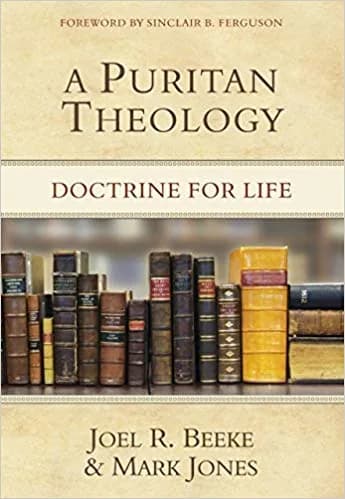
A Puritan Theology: Doctrine for Life
Joel Beeke & Mark Jones
The standard survey of what the Puritans taught, doctrine by doctrine, with their internal disagreements laid out rather than smoothed over.
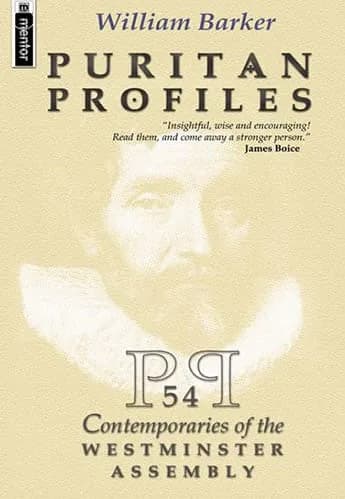
Puritan Profiles: 54 Contemporaries of the Westminster Assembly
Short lives of the men around the Westminster Assembly, the quickest way to see how varied the movement was.
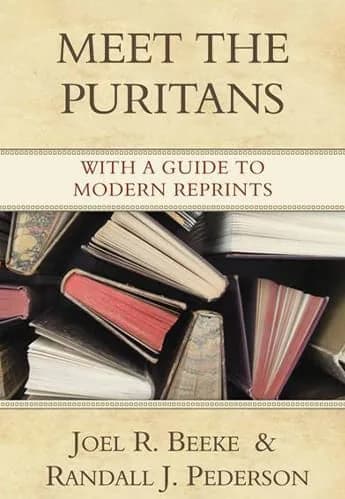
Meet the Puritans: With A Guide to Modern Reprints
Joel Beeke
Biographical introductions plus a guide to what is back in print. The best reference for placing an individual figure.
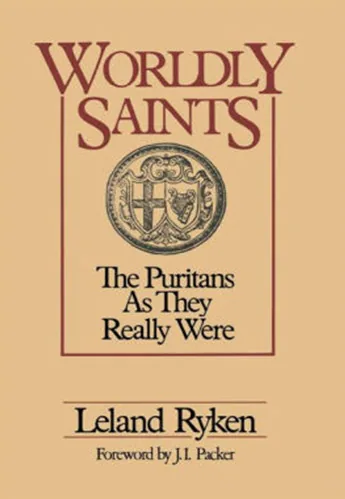
Worldly Saints: The Puritans as They Really Were
Leland Ryken
A readable correction to the caricature, on work, marriage, money and worship.
To start with a Puritan rather than a book about the Puritans, begin with the best Puritan books for beginners or browse the movement by author.
Frequently asked questions
Were the Puritans Calvinists?
Yes. The Puritans were Calvinists in their soteriology, meaning their doctrine of salvation, and broadly Reformed across the rest of their theology. They taught unconditional election, the bondage of the fallen will, effectual grace, justification by faith alone and the perseverance of the saints, and they set all of it inside covenant theology. The one significant exception among the major figures is Richard Baxter, who modified the Reformed doctrine of the atonement and of justification and was criticised for it by other Puritans in his own lifetime.
What denomination were the Puritans?
None, and several. Puritan was never the name of a denomination. It named a movement inside the Church of England that wanted the English Reformation carried further in worship and church government. Puritans divided over what church order Scripture required: some were Presbyterian, some Congregationalist or Independent, some remained conforming Episcopalians who accepted bishops, and a minority were Particular Baptists. After the Great Ejection of 1662 those parties hardened into the Nonconformist denominations, so the denominations came out of Puritanism rather than the other way round.
Did the Puritans believe in predestination?
Yes, without exception among their recognised teachers. They held that God, before creation and on no basis in the creature, chose those he would save, and that this decree is the reason anyone believes at all. They also insisted it be preached pastorally: the Westminster Confession requires that the doctrine be handled with special prudence and care, and Puritan writers used election to produce humility and assurance rather than speculation. They did disagree among themselves on secondary questions, particularly the logical order of God's decrees and how far a sinner can be prepared for grace before conversion.
Is Puritanism a branch of Christianity?
Not in the sense that Roman Catholicism, Eastern Orthodoxy and Protestantism are branches. Puritanism was a reform movement within English Protestantism, and within the Reformed wing of it. The accurate way to place it is Christianity, then Protestantism, then the Reformed tradition, then Puritanism as a movement inside that tradition during roughly 1560 to 1700. It produced denominations, but it was not one.
Were the Puritans Presbyterian or Congregationalist?
Both, and this was the sharpest division among them. At the Westminster Assembly the Presbyterian majority argued for government by graded assemblies of elders, while a group known as the Dissenting Brethren, including Thomas Goodwin, Philip Nye, Jeremiah Burroughs, Sidrach Simpson and William Bridge, argued that authority belongs to the local congregation. The Savoy Declaration of 1658 gave the Congregationalist position its own confession. Both sides held the same soteriology, which is why the two confessions read so much alike.
Are there Puritans today?
Not as a movement. Puritanism belonged to a specific situation, the unfinished reformation of the Church of England, and it ended with the Nonconformity of the later seventeenth century. Its theology continues in confessional Presbyterian churches, Reformed Baptist churches, Reformed Anglicanism and much of conservative Reformed evangelicalism, and its books are still in print and widely read. People sometimes describe themselves as Puritan in sympathy, but the historical movement is over.
Read the theology in their own words
The Puritans argued all of this in print, pastorally and at length. Browse all 64 Puritan Paperbacks or read who the Puritans were.